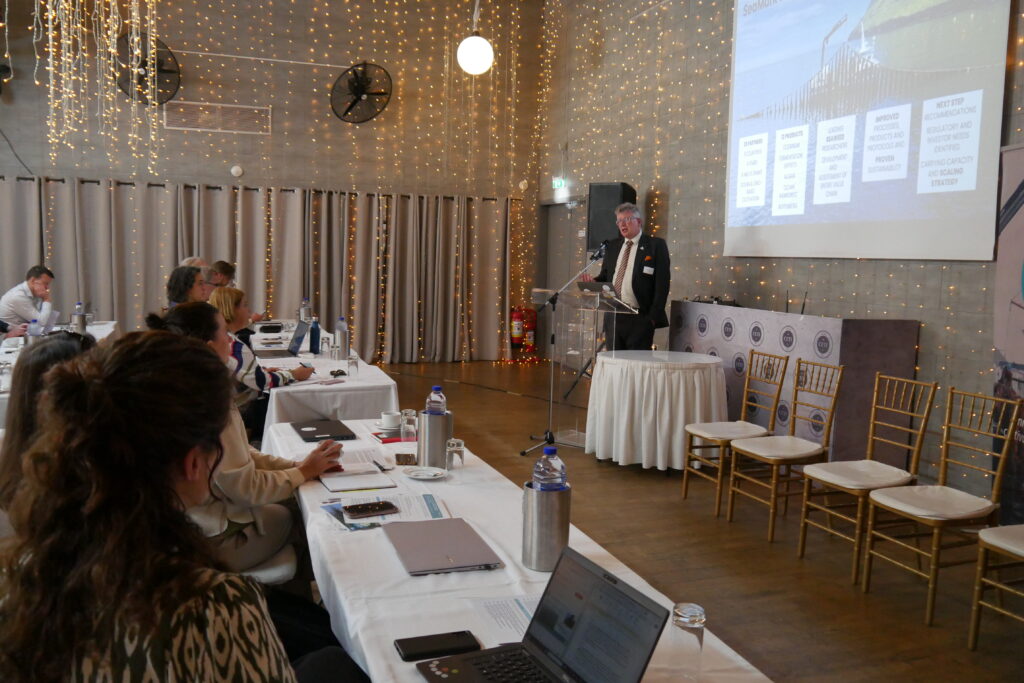
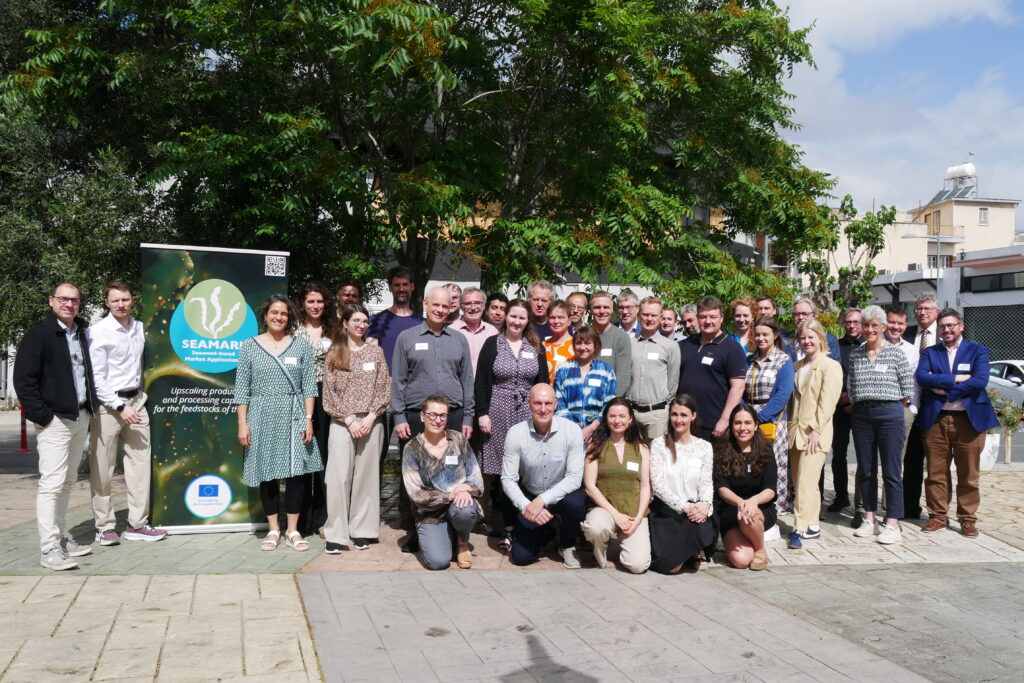
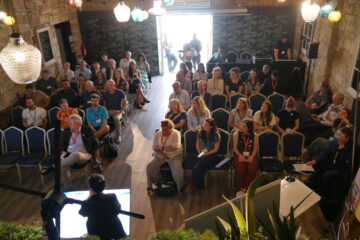
The SEAMARK Final Conference brought together partners, researchers, industry representatives, and policymakers to present the project’s key results and discuss the future of seaweed-based value chains in Europe.
The following takeaways reflect the main insights and discussions from the day:
- SeaMark findings highlighted the high technology readiness level achieved for both ocean-based and land-based cultivation of Saccharina and Ulva. The protocols, scientific functional validations, and prototypes developed within SeaMark are now ready for exploitation, with 10 key exploitable results (KERs) identified.
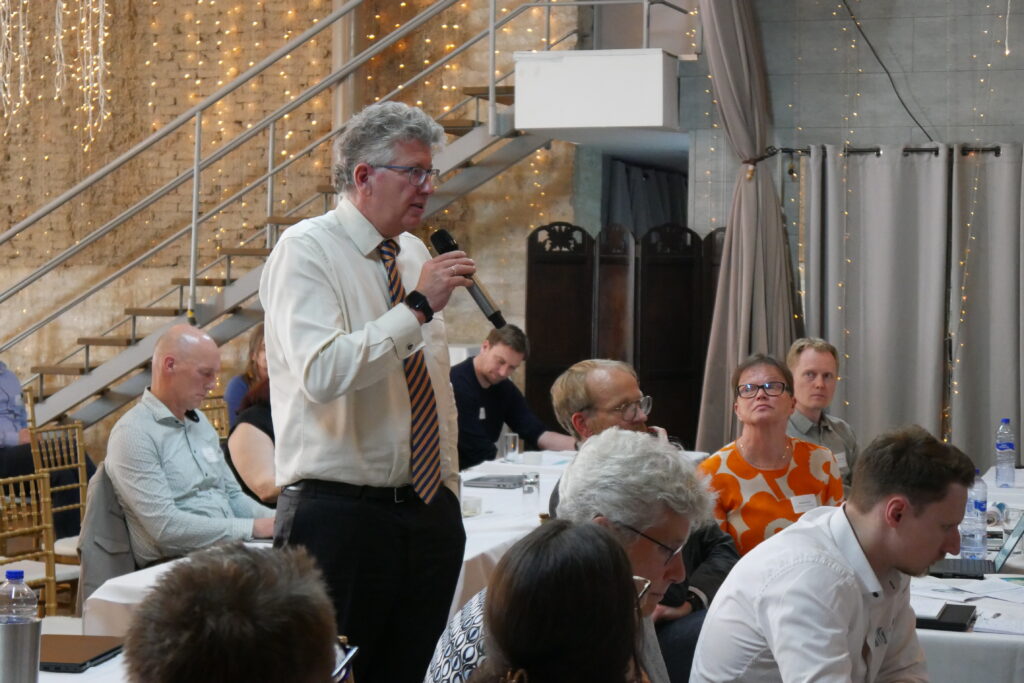
- Reflecting on the project, biostimulants should have been included from the outset among the other 12 products. Biostimulant products derived from cultivated seaweed are expected to play a leading role in market development and enable industry scaling, while addressing a key EU challenge: reducing fertiliser use in agriculture.
- Regulatory barriers remain a significant bottleneck. For example, constraints affecting fucoidan-based health products and biostimulants derived from cultivated seaweed are limiting market access, forcing companies to operate outside Europe, making it difficult to attract investment.
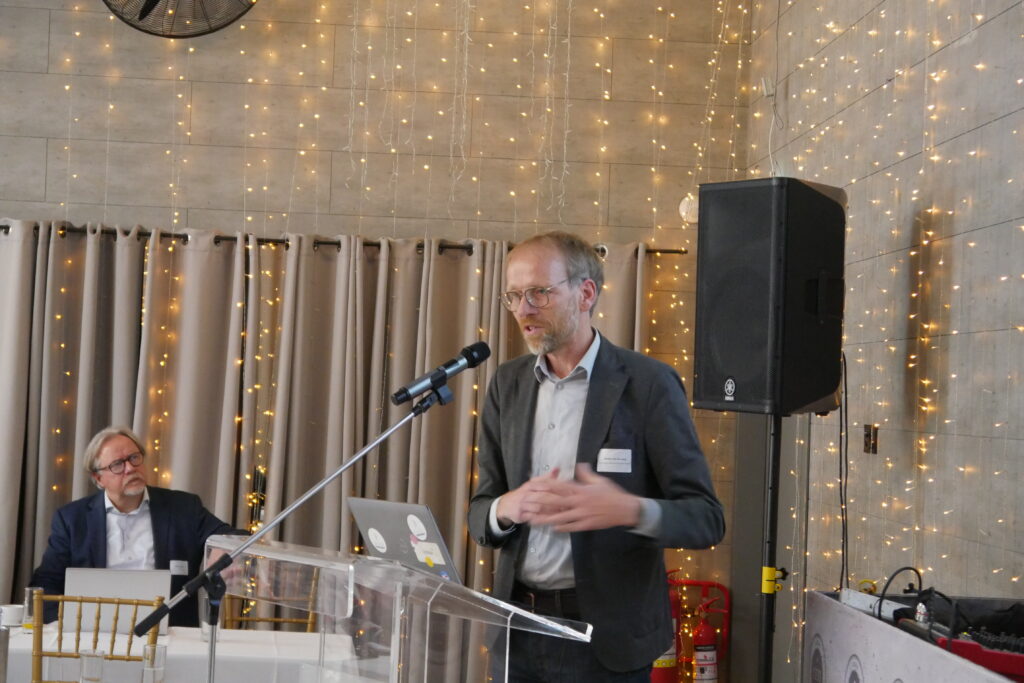
- The Ecosystem services were documented in SeaMark for open sea cultivation, but regenerative industries are emerging within markets that still largely price products as if environmental degradation were free. The puzzle is to understand how environmental innovations emerge and evolve, and what’s needed to enable them to replace, transform or reconfigure existing systems.
- SeaMark has demonstrated that Europe’s seaweed sector is advancing toward commercial reality, but realising its potential will not come from a single breakthrough. Successful scale-up requires coordinated alignment between technology, biomass supply, market formation, regulation, and financing.
A systematic regulatory shift is therefore needed to unlock the full potential of algae-based solutions in Europe.
As SeaMark’s four years of work made clear, the technology is ready. What comes next is a question for policymakers, investors and regulators:
“The challenge is not whether the European seaweed industry can scale — but whether the surrounding system can evolve to support it.”
Want to learn more about the event?

0 Comments